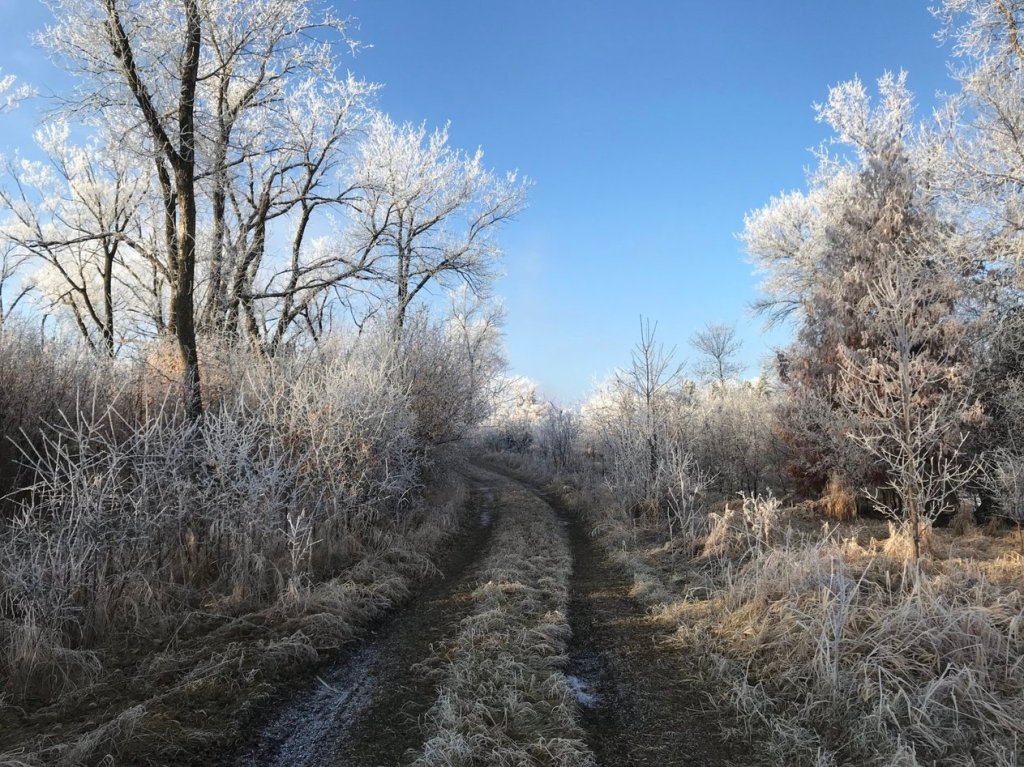
On a winter day that thinks itself summer, the ice built up on the awnings of the town’s Walmart drips down to splash on the sidewalk in a shining curtain of rainbow drops. Parked in the lot’s last space, an old Ford Taurus sits silently. I sit inside, barely visible through the dirty, cloudy windows, staring hard at a small bag with eleven white pills inside, smoke curling from my lips to hover like incense at a funeral in the air around me.
The passenger seat is occupied by emptied bottles of liquor and cigarette cartons, all I have left of my friends and family. Taaka for my brother’s death, Jim Beam for my father’s anger, Seagram’s for my mother’s apathy; each one a memory I’d tried in vain to erase.
Now, though, I’ll rub out the stains no bottle of alcohol has been able to get out. I take a hard pull of the cigarette, let it hurt, then exhale slowly.
“Where are you going?” a voice from the other side reaches me.
I confuse the voice for my own thoughts and almost laugh, but don’t. There wasn’t a place on Earth where the pile in the passenger seat wouldn’t go with me. I could drive for days but there they’d stay, each glass an empty plea for peace. I used to clear them out, when this first started, but they’d always return, in greater numbers. I couldn’t live without them.
A knock now against the driver’s side window. I turn my head to see the reason for the Jamesons.
“Hello, Charlie.” My own voice surprises me. I’m not used to speaking while smoking. These are times when I’m looking down at myself, so far away, with a dizzy, distant feeling. I’m not myself, until I see Charlie.
“Roll the window down,” Charlie says. “It feels like we’re talking through prison glass.” His green eyes squint against the bright morning sun and he pushes brown curls out of his face with slender fingers.
I close my hand around the pills and shove them into the pocket of my battered overcoat, but I don’t roll the window down. “How’d you find me?”
“Please roll the window down, I can barely hear you,” he says.
I put the cigarette out, uncomfortable with smoking in front of someone, especially Charlie. My vices were for my eyes only.
“How’d you find me?” I ask loudly, unwilling to touch the window crank.
We stare at each other through the dirty glass. “Let me in,” he says, but not with his voice; he says it with his eyes, and in the way he places his hand gently on the door latch.
I’m too embarrassed, too ashamed to unlock the door for him, but for some reason I do. I hit the button just below his hand, my fingers trembling.
He crawls into the back seat, respectful of the passenger seat’s occupancy. I appreciate that he doesn’t want to disturb the pile of memories, but I feel the space beside me is heavy and that it might be lighter if he were to sit there instead.
“I’m sorry,” I say, about the stagnant air in the car, the stale smell of cigarettes, the miasma of alcohol. I haven’t showered in days and I touch my greasy hair self-consciously.
“I got your text,” he says.
Had I sent a text? I couldn’t clearly remember the night before. I was always forgetting the things I wanted to remember, remembering the things I wanted to forget. Reflexively, I reach for a bottle I think might have something left in it but it’s empty. I’d been in the parking lot waiting for the liquor store to open. I put my hand back in my pocket with the pills and finger them absently.
“I appreciate you asking for help,” Charlie tells me.
“I don’t think I did,” I respond, because it doesn’t sound like something I’d do.
There’s a pause, and then Charlie says, “Maybe not. Where are we going?”
I glance at him in the rearview mirror, confused.
“I’m coming with you,” he says.
I look down and stare hard at a bottle of Jameson. Had I really texted him that I was leaving, that I didn’t plan on coming back this time? I wanted to see what exactly I’d told him but I didn’t know where I’d put my phone.
He’s waiting for me to explain myself, maybe, or to start the engine, but I can’t bring myself to do either. We listen to the soft sound of snow melting around us, the shifting of ice, the dripping of icicles. I could tell him to get out, or I could tell him the truth, but I don’t have the strength for either. Instead, I ask, “How’s college?”
“Sam,” he responds, as if about to say something he suddenly thinks better of. “It’s good,” he answers instead.
I reach for the keys under my seat. I hold them in the palm of my hand. They are cold and sharp.
“I heard what happened to Adam,” Charlie says. “I’m really sorry.”
Adam was eleven and a month ago he’d killed himself, a year after I’d moved out of our parents’ house. I should have stayed to protect him but instead I’d left as soon as our dad got out of prison. I’d gone and he’d killed himself. I was eight years older than him. Next year I’d be nine years older. He’d be eleven forever and our age gap would just grow wider and wider.
I start to cry. I don’t mean to, but I can’t help it. I miss Adam. I miss his laugh, I miss how much he loved the Flash, I miss his stutter and his bright brown eyes. I miss watching cartoons with him, I miss making him peanut butter sandwiches, I miss that he always faced the toilet paper the wrong way, and that he had a budding addiction to Dr. Pepper.
“It’s unfair,” I say between sobs, but I’m not sure what exactly I mean.
Charlie puts his hand on my shoulder silently. I appreciate it, because for a second, I forgot he was there. I thought I was alone again.
Without alcohol, it takes me a long time to pull myself together. When I finally do, I say, “He never got to see the ocean. Imagine dying and you’ve never seen the ocean.”
“Have you seen the ocean?”
I smile in spite of myself, wiping the tears off my face with my sleeve. “No.”
“Let’s go see it.”
I stare at Charlie in the rearview mirror. His face is serious. I want to tell him that I have plans, that I can’t go see the ocean, that I shouldn’t. “It’s a twenty-hour drive, at least.”
“I have time.” He makes himself more comfortable in the back seat. “I’ll help navigate.”
I start the car hesitantly. I glance at him again, expecting to see an expression of regret, of second thoughts passing over his face that I could hook, but he looks calm. I let go of the pills in my pocket and put both hands on the steering wheel. We head east, driving into the rising sun.
The year my father came home, I broke up with Charlie. He wanted to go to college and I wanted to disappear. We’d been going to school together since the fifth grade and had bonded over that desire to escape our tiny hometown, but I knew his horizons were much broader than mine. He wanted to be a journalist in New York City; I just wanted to get away from my parents. I knew he would get into a good college, and I would run away. I broke it off so neither of us would hesitate, so we wouldn’t hold each other back.
On our trip to the ocean, we see a train on the other side of a lake, skirting a cliff. We see Amish buggies and we see the great and endless fields of the Midwest. We stop in Chicago and see Lake Michigan.
“This must be what the ocean is like,” I say.
“No, it’s different,” Charlie says. “It’s similar, but it’s different.”
“I doubt it’s much different.” I can’t imagine it.
“You should write him a letter.”
“Who?”
“You should write Adam a letter. Put it in a bottle and send it out to sea.”
“Why?”
“I’ve heard it helps. Gets the thoughts out of your head.”
I consider his suggestion for a moment. “What would I even say?”
Charlie glances at me and smiles sadly, shrugging. “You’ve got thirteen hours to think about it.”
I stare out at the ice on the shore of Lake Michigan. I ruminate over telling Adam everything I never got to say to him. I think of all the apologies I’d swallowed, tasting like vodka and vomit. I think of the eleven pills in my pocket, one for every year of his life. What could I say to my little brother that would mean anything?
I buy a notebook and pens in Cleveland and start writing in Pittsburgh, when I decide to let Charlie drive. I stop writing for a while as we enter New Jersey to admire the mountains, the first I’ve ever seen. We make it to Atlantic City Beach in time to see the sun rise, and I sign my name to Adam’s letter.
Charlie has a bottle of Taaka in his hand, because I’d told him those were for my brother. We had cleaned the others away, dumped them in a Gloucester Township recycling bin.
I’d told him everything in the car, dropping little pieces of myself as we crossed the United States, like Johnny Appleseed, burying small seeds that, by the time we reached the ocean, had sprouted something small and beautiful inside our hearts.
I slip the letter into the bottle and cap it. Together, we wade out into the icy water, up to our knees, hands held. I remember the pils and let Charlie go.
I pull the bag out of my pocket and empty it into my hand, eleven alabaster promises to forget everything for good. I look out at the endless sea, at the sun on the horizon glittering upon the waves, the smell of salt hanging in the air, the cold waves undulating against my legs. I drop them into the water.
I take Charlie’s hand again and I gently toss the bottle out beyond the waves. We watch it float, bobbing up and down, as a buoy. Even though our legs go numb, we wait until the message disappears from view.
Adam,
Your birthday just passed. You would be twelve now. I remember when you were younger, you always wanted to be twelve. It was your favorite number, your lucky number, because it was the number of your soccer jersey the year mom could finally afford to let you play.
I knew you’d be good at soccer because you always had so much energy. I could tell, right when you started to walk, that you were going to be faster than me, stronger than me; you were already smarter than me. Nobody could hope to keep up with you.
You came to the hospital with me the day dad got arrested. You were only five then, I wonder if you remember? He broke my jaw because I called the police on him for hitting mom. I could hardly speak and I couldn’t eat and mom told you not to bug me, but you wouldn’t leave me alone. You wanted to make sure I had everything I needed. You brought me your toys, your juice boxes, your applesauce, you even slept in my bed with me at night, in case I had nightmares, you said.
I’d never felt more loved.
You were my best friend and I never deserved the love you gave me. It was pure and you were innocent and I was afraid. I made so many promises, to take care of you, to be a good brother, to always be there, but I forgot them all the day dad came home.
I failed you, Adam, as a friend and as a brother. The only thing greater than my love for you was my fear. You were right, back then, when you were five. I did have nightmares. I’ve had nightmares of him every night, of his fists, of his rage, of the bloodstain on the living room carpet that never came out.
I’m sorry, Adam. I know it’s too late to say any of this, but I’m sorry. I’m so sorry. I love you, and I miss you, and I never should have left. It will forever be the greatest regret in my life. I wish I had taken you to see the ocean, to see the mountains, to see how beautiful the world is outside the walls of our house.
I want to believe you’re at peace now. I want to believe you managed to get away, in the end, and that you might have a chance at happiness now. Charlie says you probably want the same for me. I want to believe that, too.
I love you, Adam, and I’ll carry your memory in my heart forever. I won’t forget you.
-Samuel
I imagine him reading it and I imagine him forgiving me, though I know I’ll never forgive myself. Though my passenger seat may be empty, I’ll carry the weight of his death forever.
“I’m cold,” I say to Charlie.
He wraps his hands around mine and says, “I’ll keep you warm.”

 j.k. armstrong
Leave a comment